Presented at:
 | Kia ora |
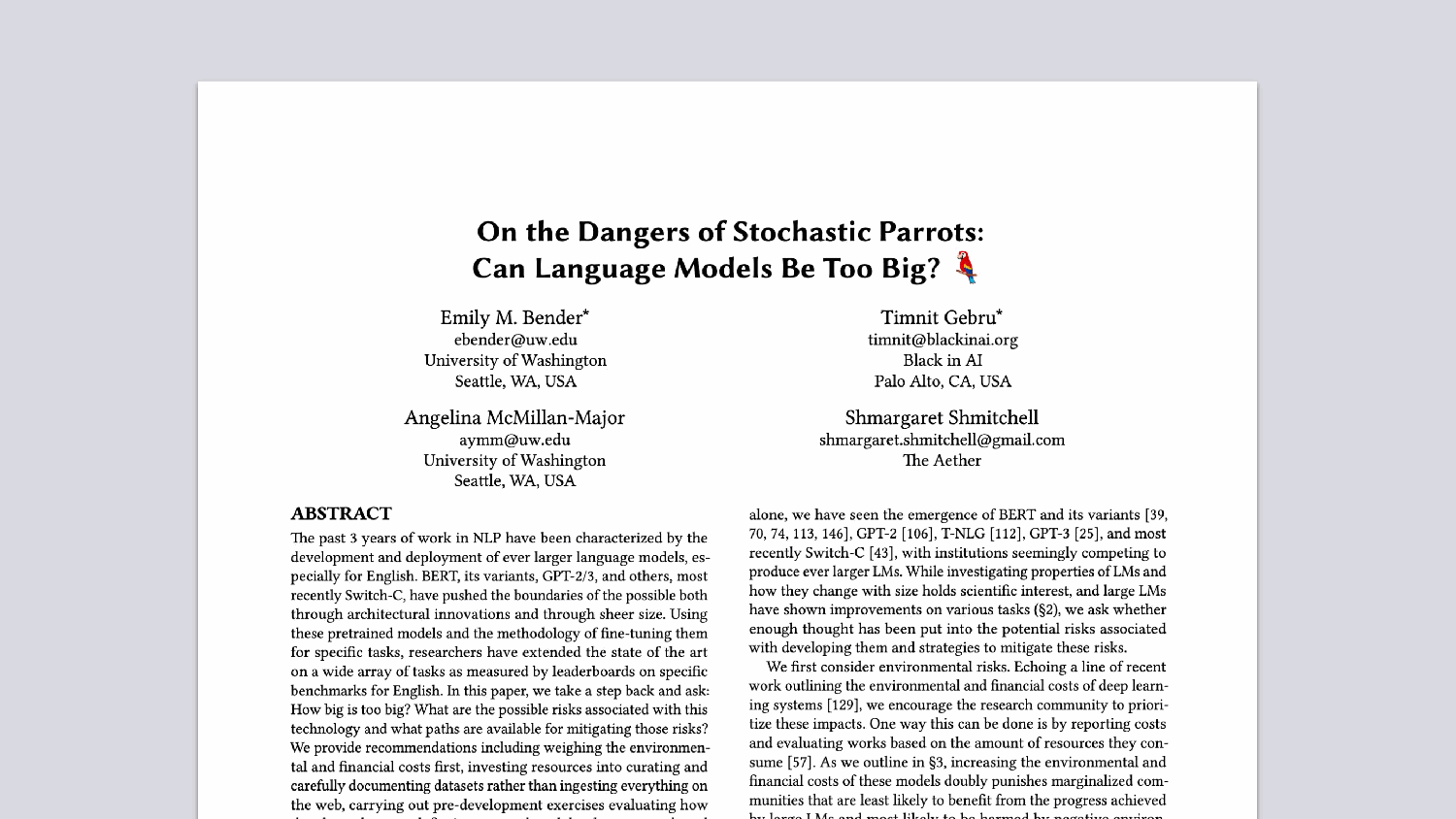 | The Paper "On the Dangers of Sto-chas-tic Parrots: Can Language Models Be Too Big? 🦜" By Bender, Gebru, (et all) Is arguably one of the most impactful scientific articles published in the this decade. It has brought about a reconsideration of some of the fundamental elements in our industry, and has caused much friction amongst vendors and platforms. Oh, and also the llm stuff, guess. Because I'm interested in just part of the title. |
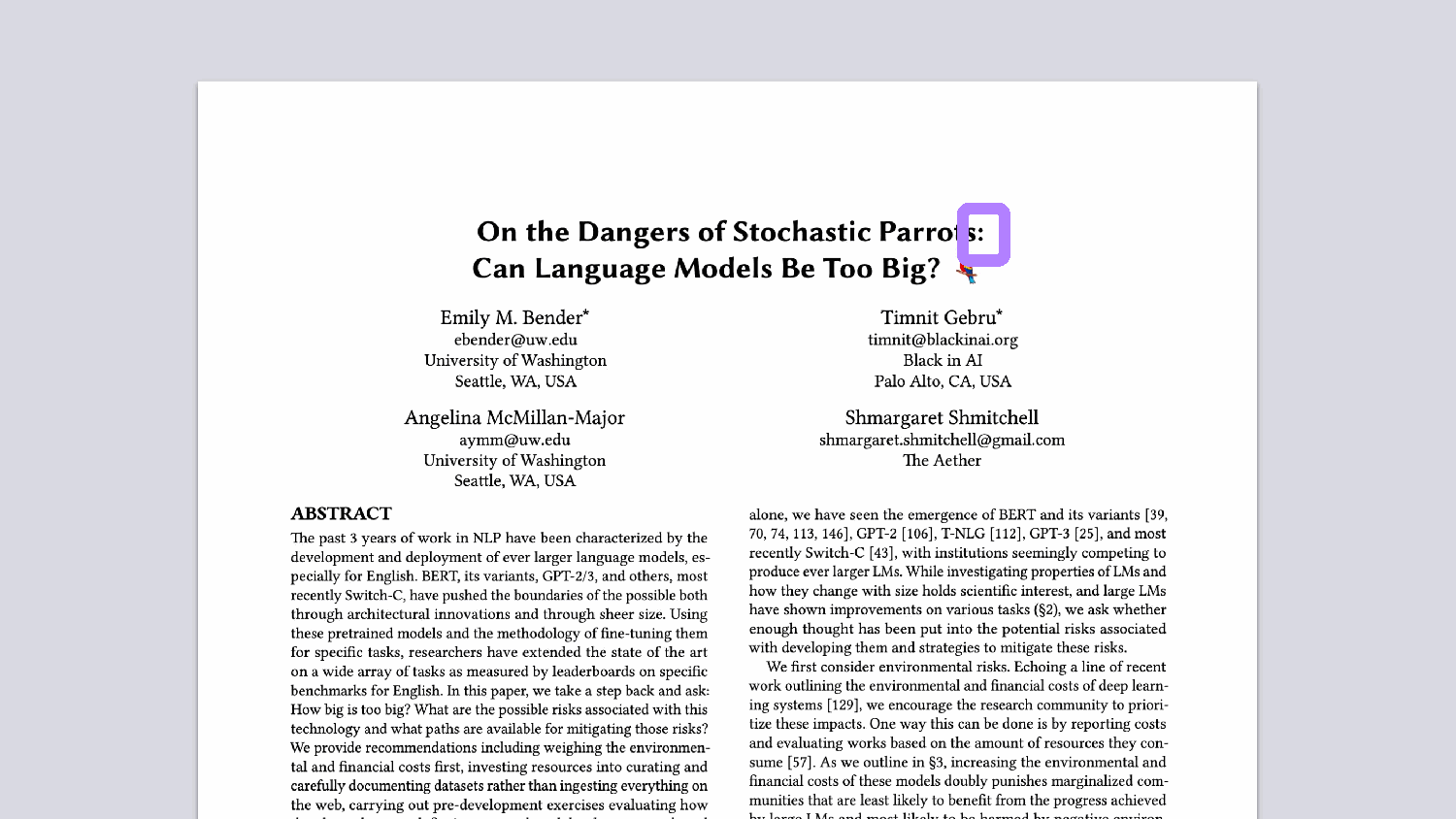 | Not the colon, a perfectly cromulent part of any paper or presentation title, thank you very much |
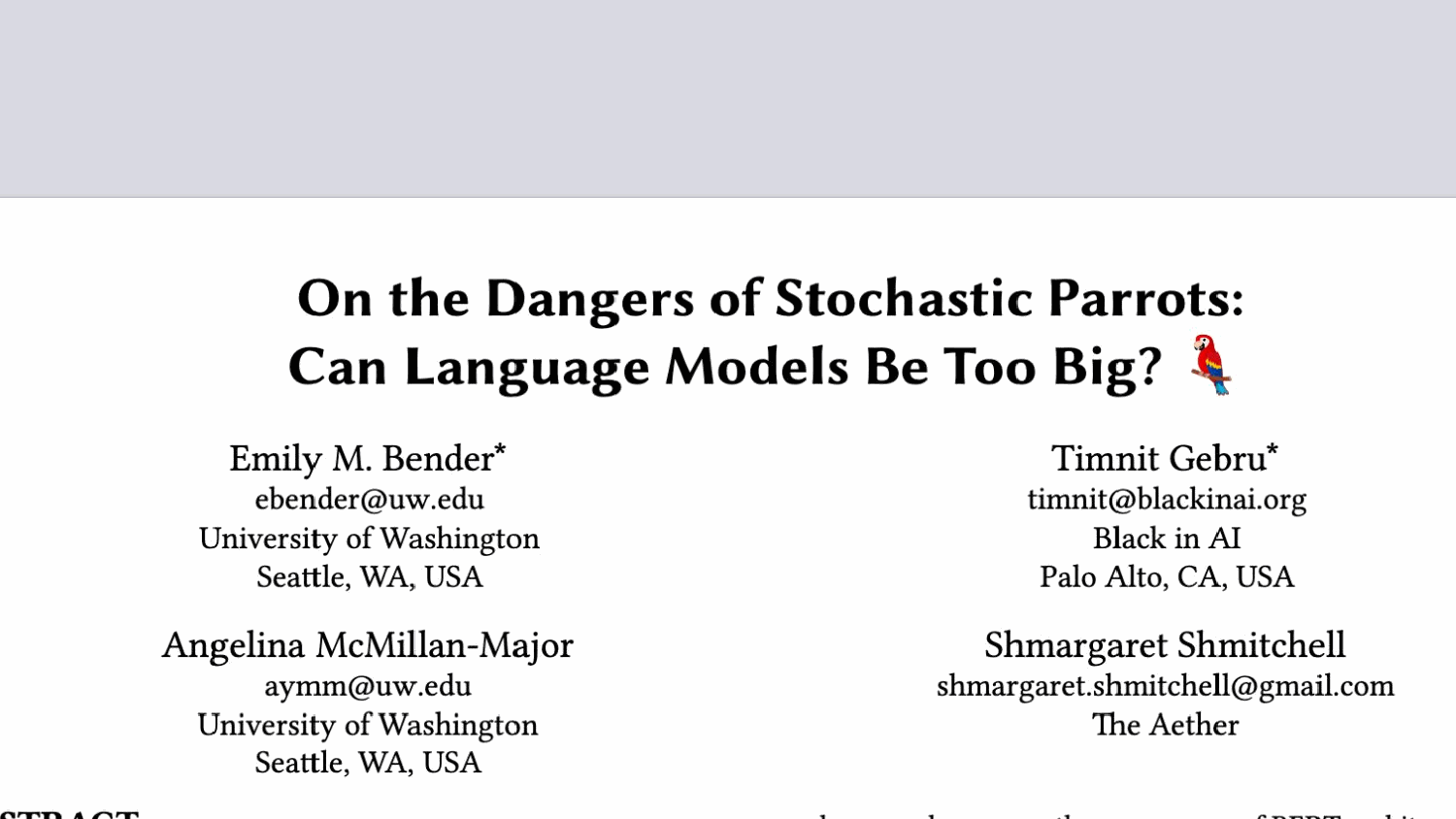 | I'm interested in the end of this title. |
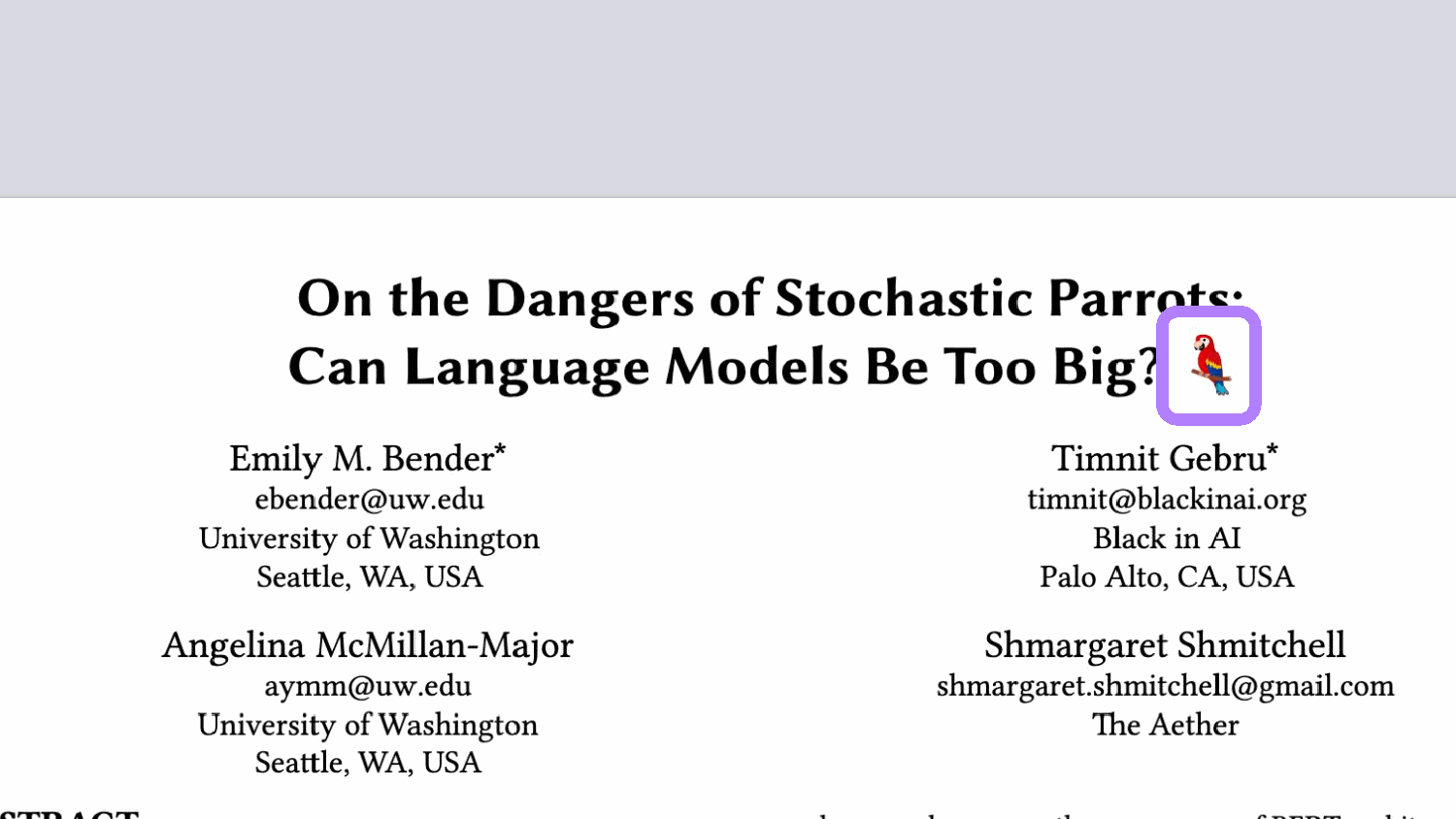 | I'm interested in the end of this title. This bit |
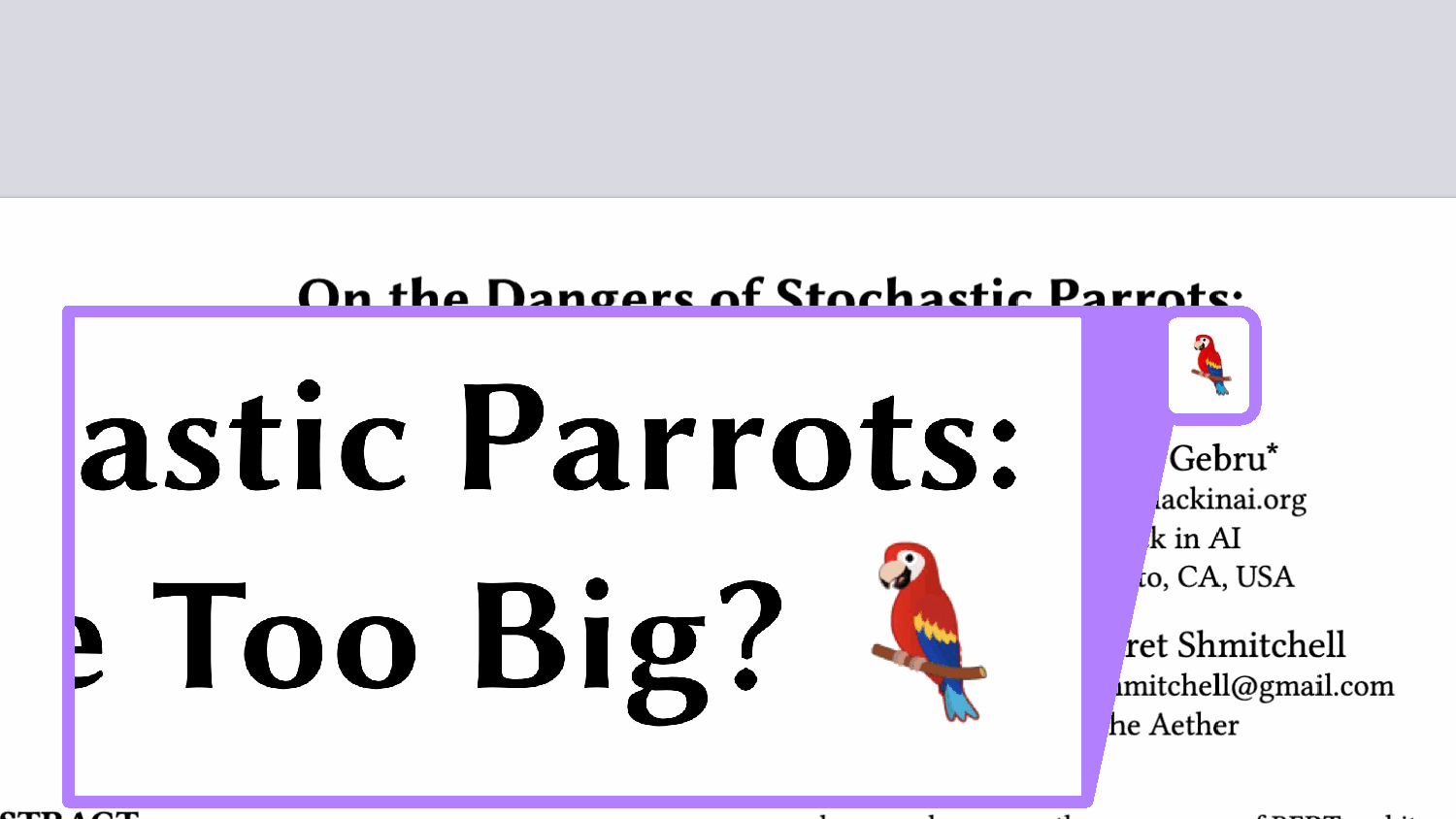 | This parrot. Now, this might be an unfamiliar parrot to you |
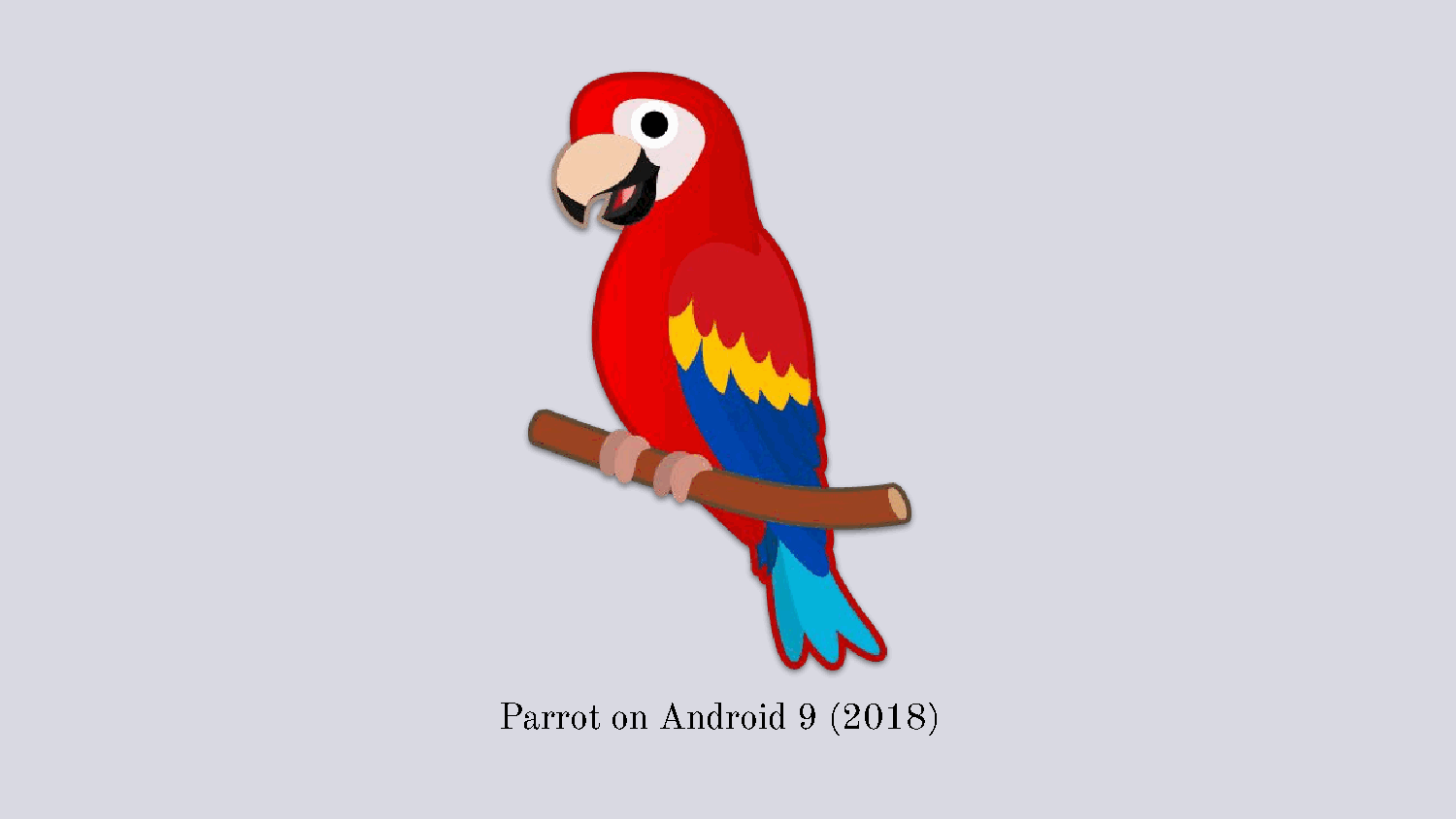 | Because it is a version of the Parrot emoji available on Android 9 in 2018. Depending on what platform you're viewing the original emoji on, the parrot will look very different |
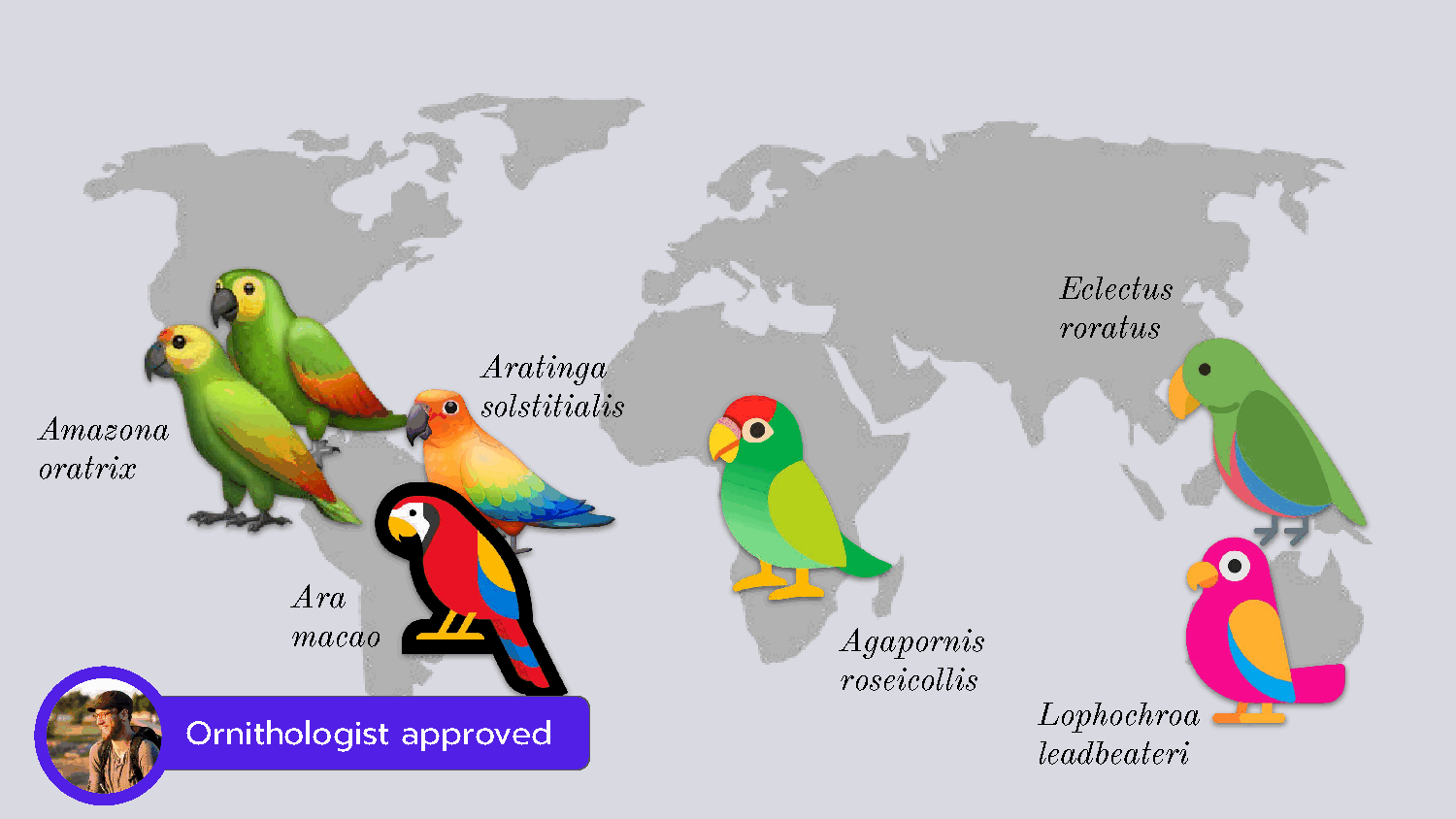 | A cursory avian identification of some of the options available results birds from most all tropical climates of every continent. However, none of these renderings are accurate based on the original subject. |
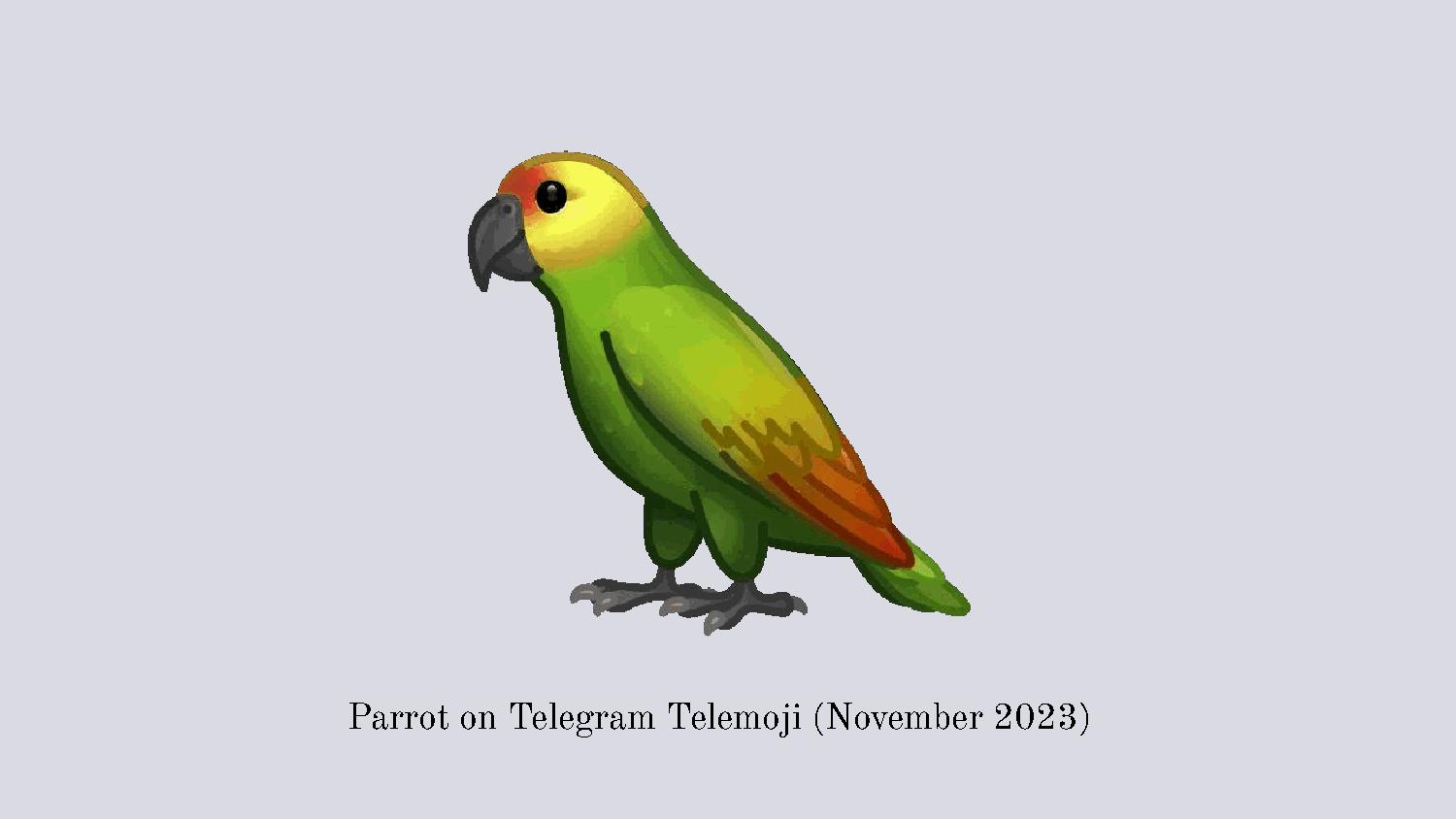
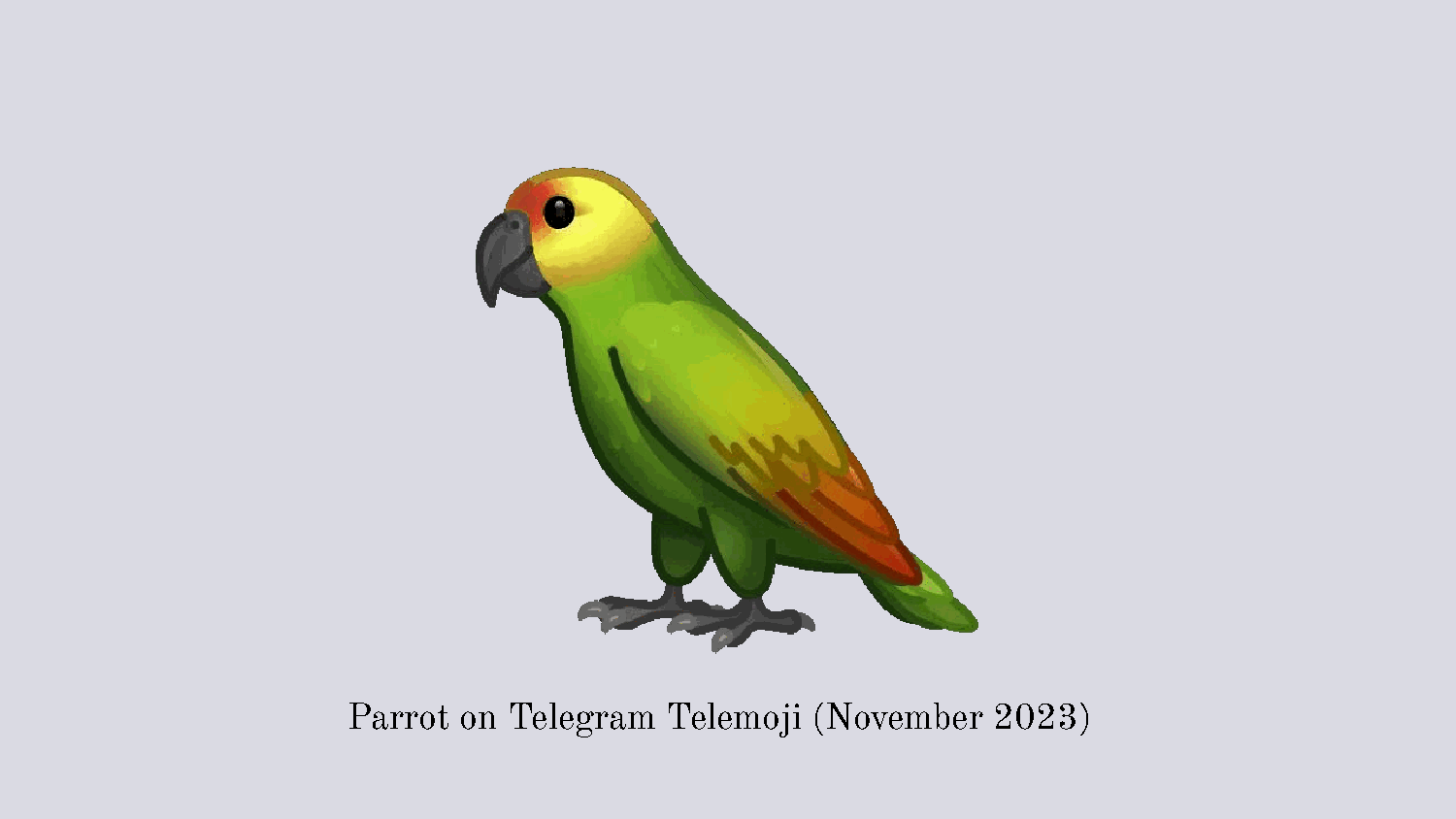 | The closest rendering is the Telegram Telelmoji, seen to act much like the original parrot that the emoji is based on. |
 | We know this because we can read the submission to the unicode consortium, and see the justification for addition |
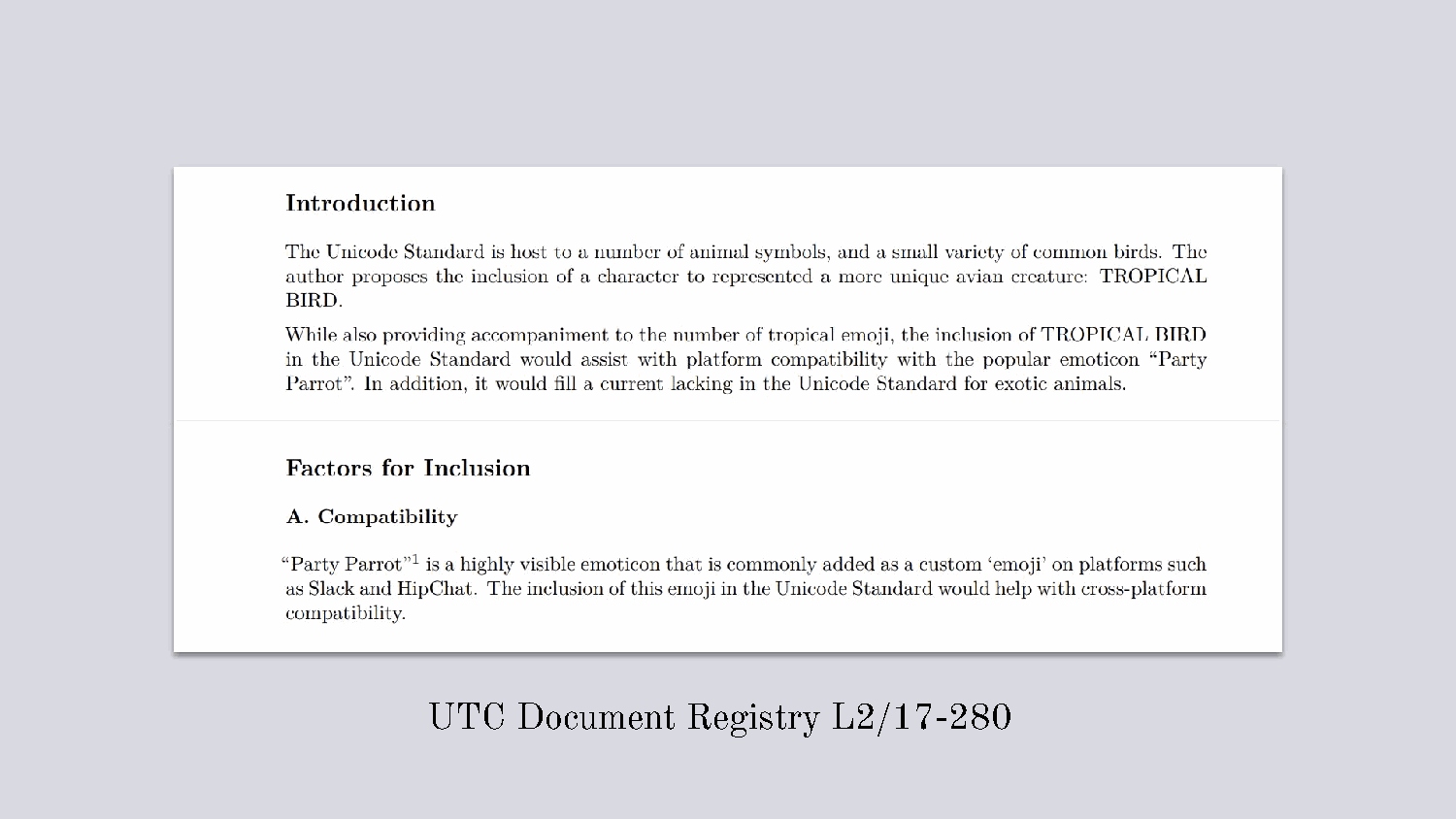 | From the original submission, "The inclusion of TROPICAL BIRD in the Unicode Standard would assist with platform compatibility with the popular emoticon “Party Parrot” |
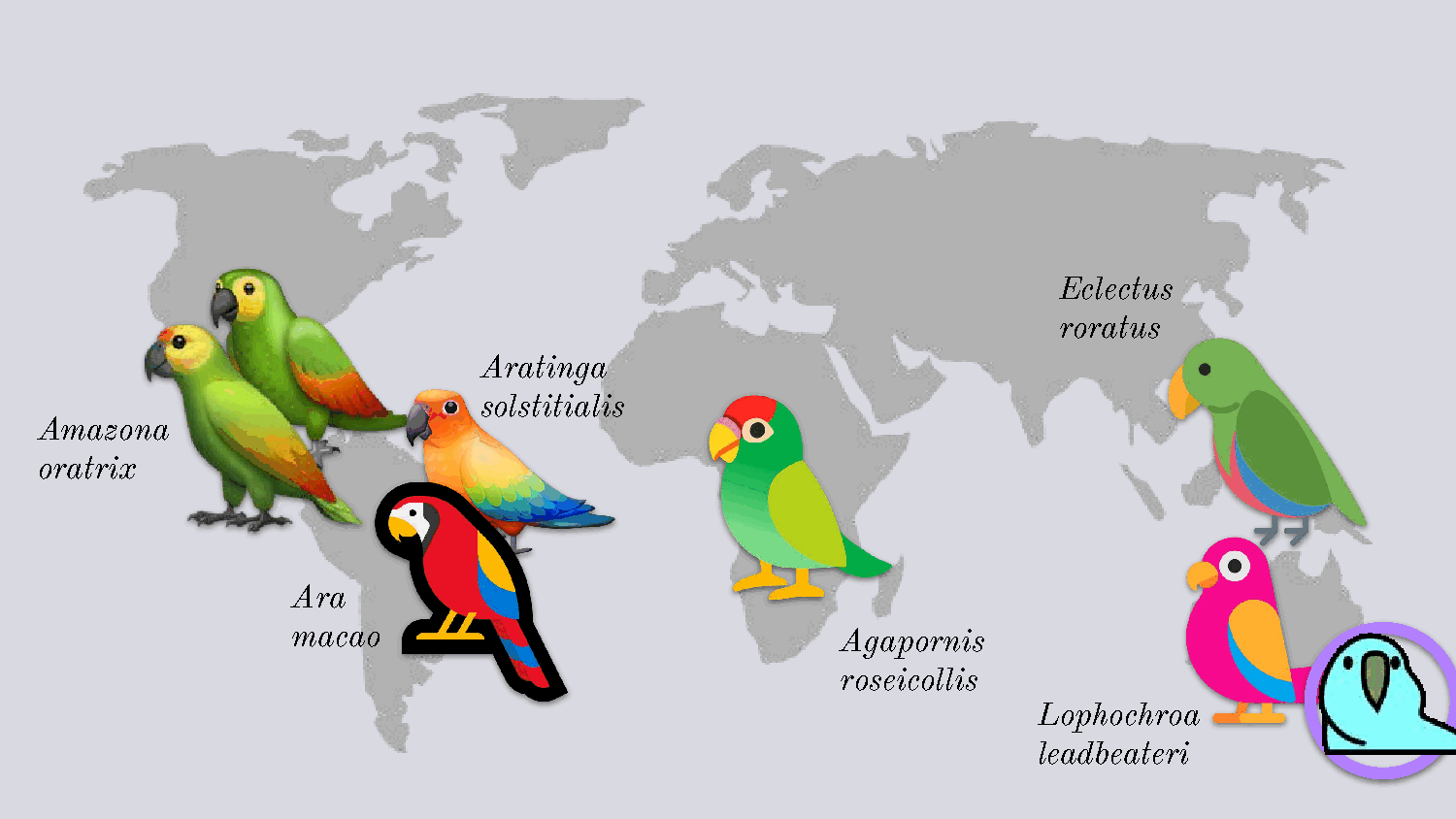
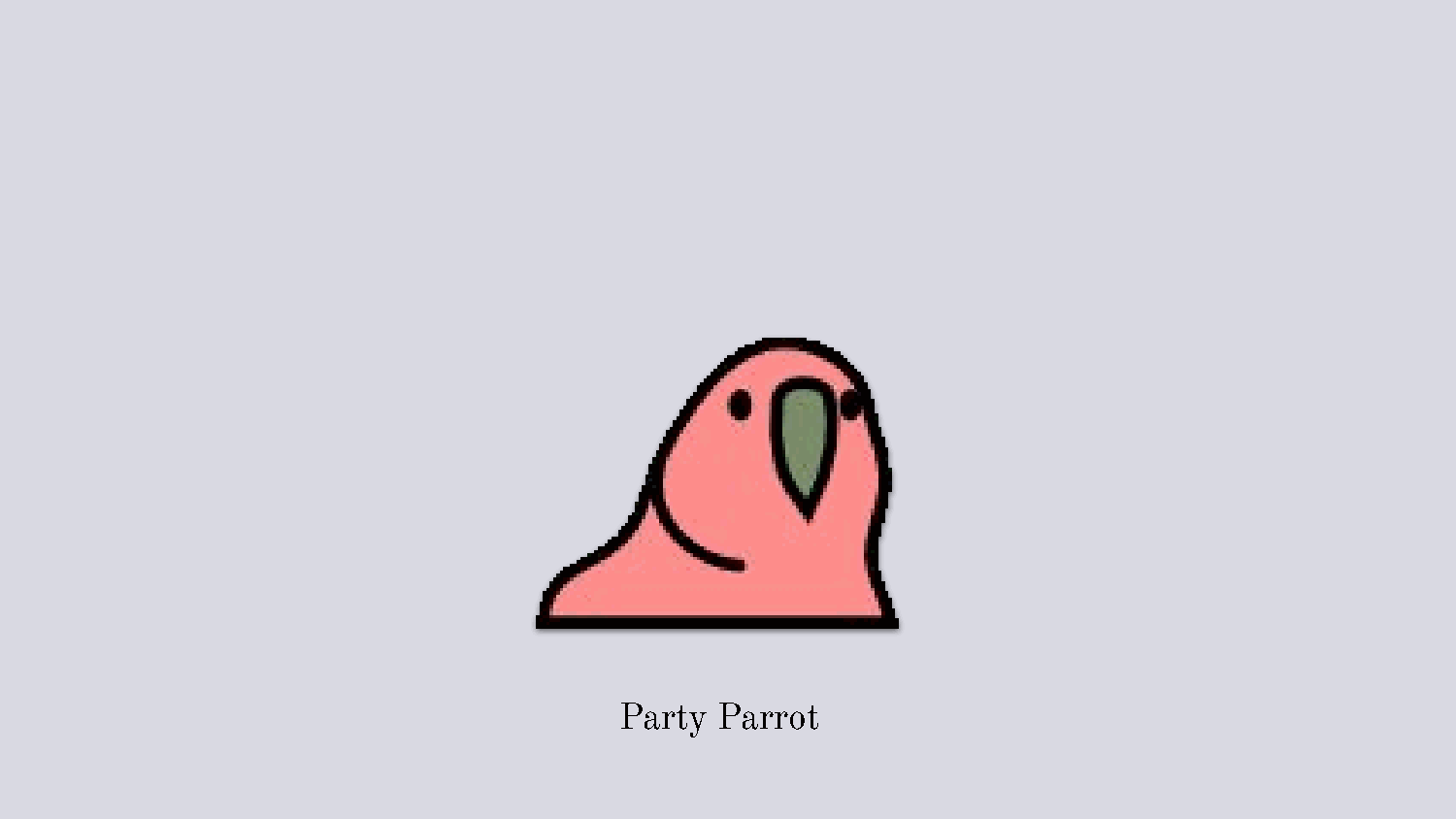 | This is party parrot. This parrot is based on a very specific parrot, based on Sirocco, the kakapo, a native parrot of aotearoa |
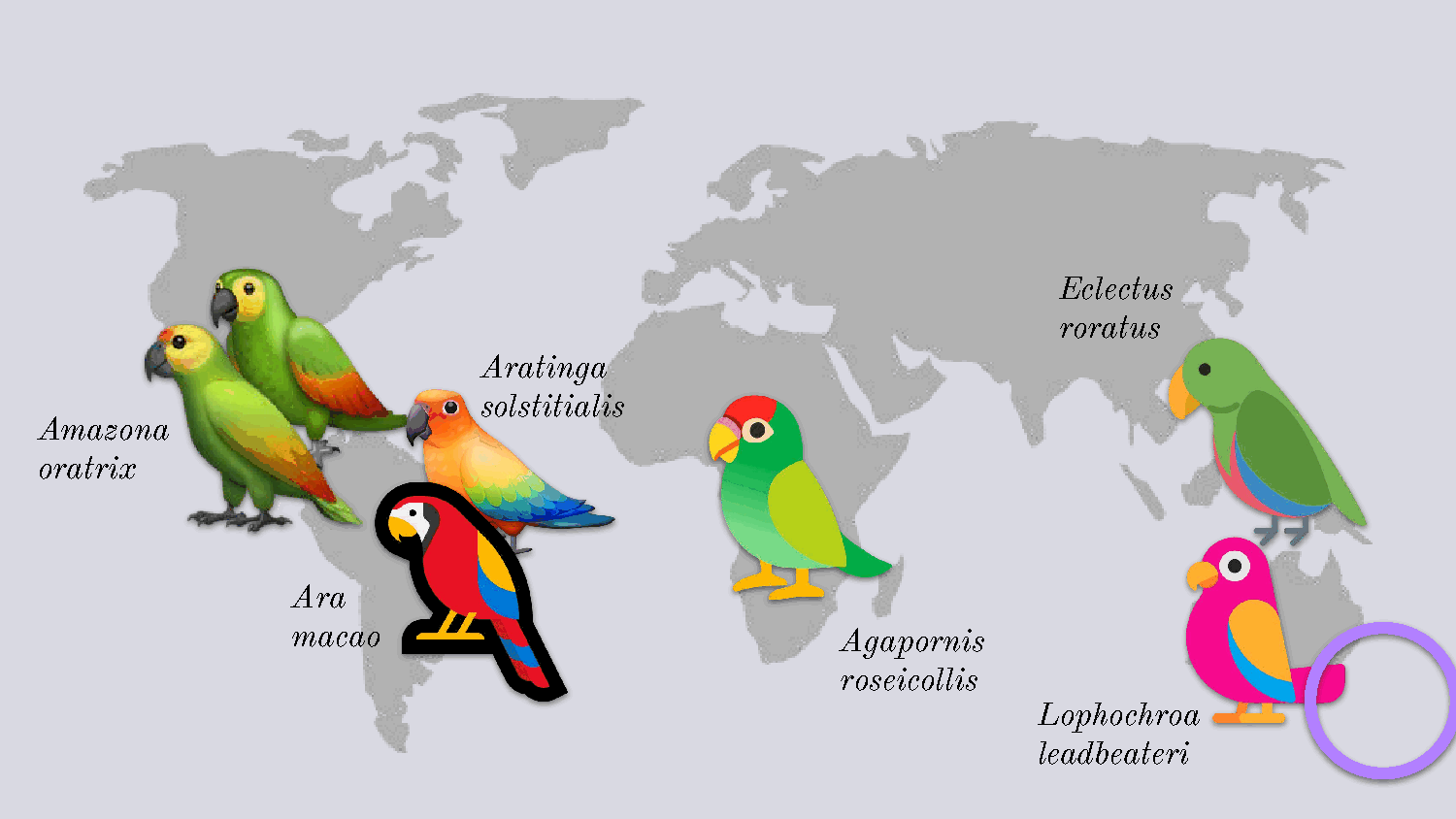 | This bird belongs here, on an island that is missing from the graph |
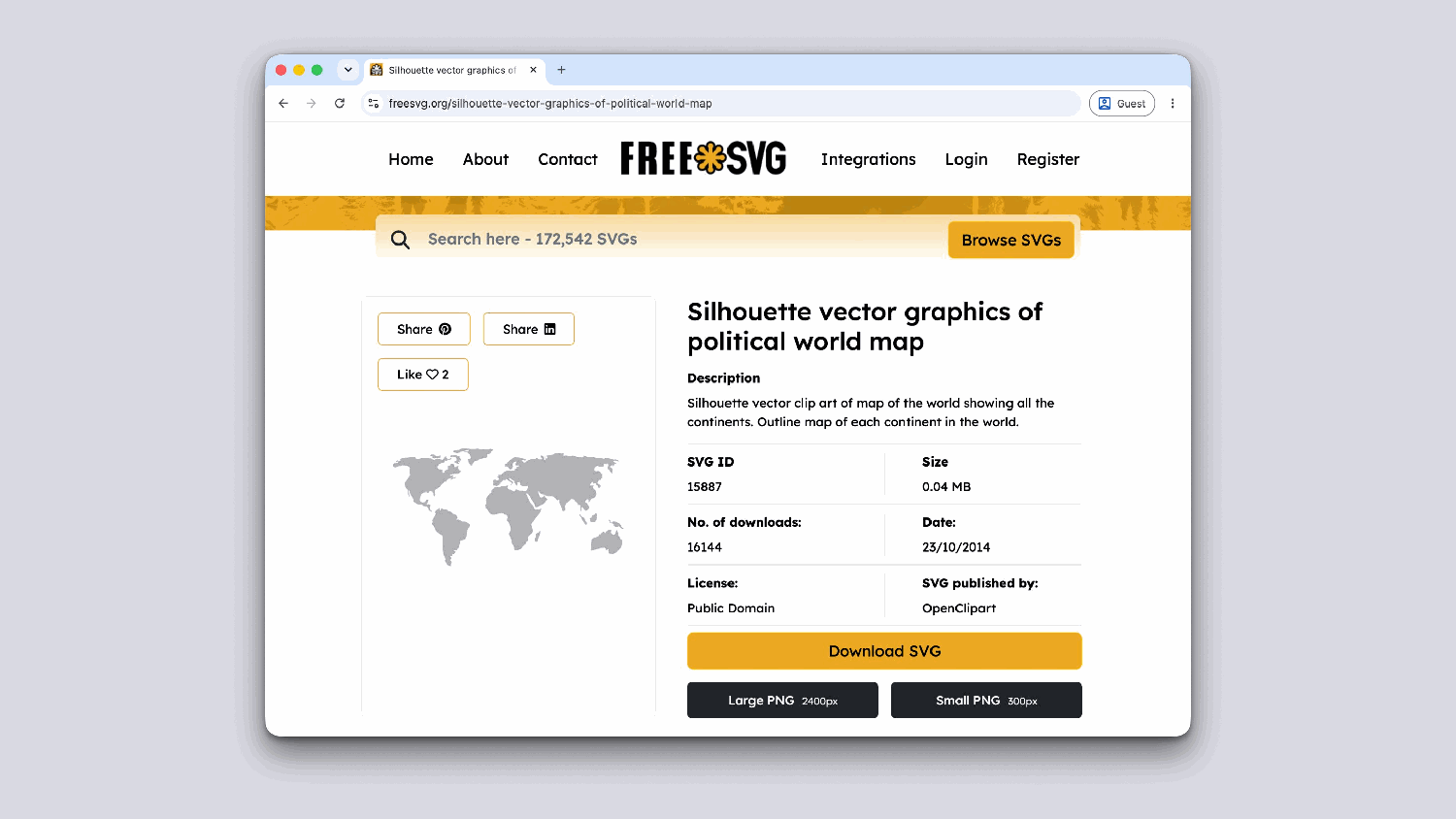 | Because it's missing on the Silhouette vector graphic of political world map from freesvg.org. |
 | So who is to blame for all this? Why is there a parrot emoji in Unicode, anyway? |
 | It me. Hi. |
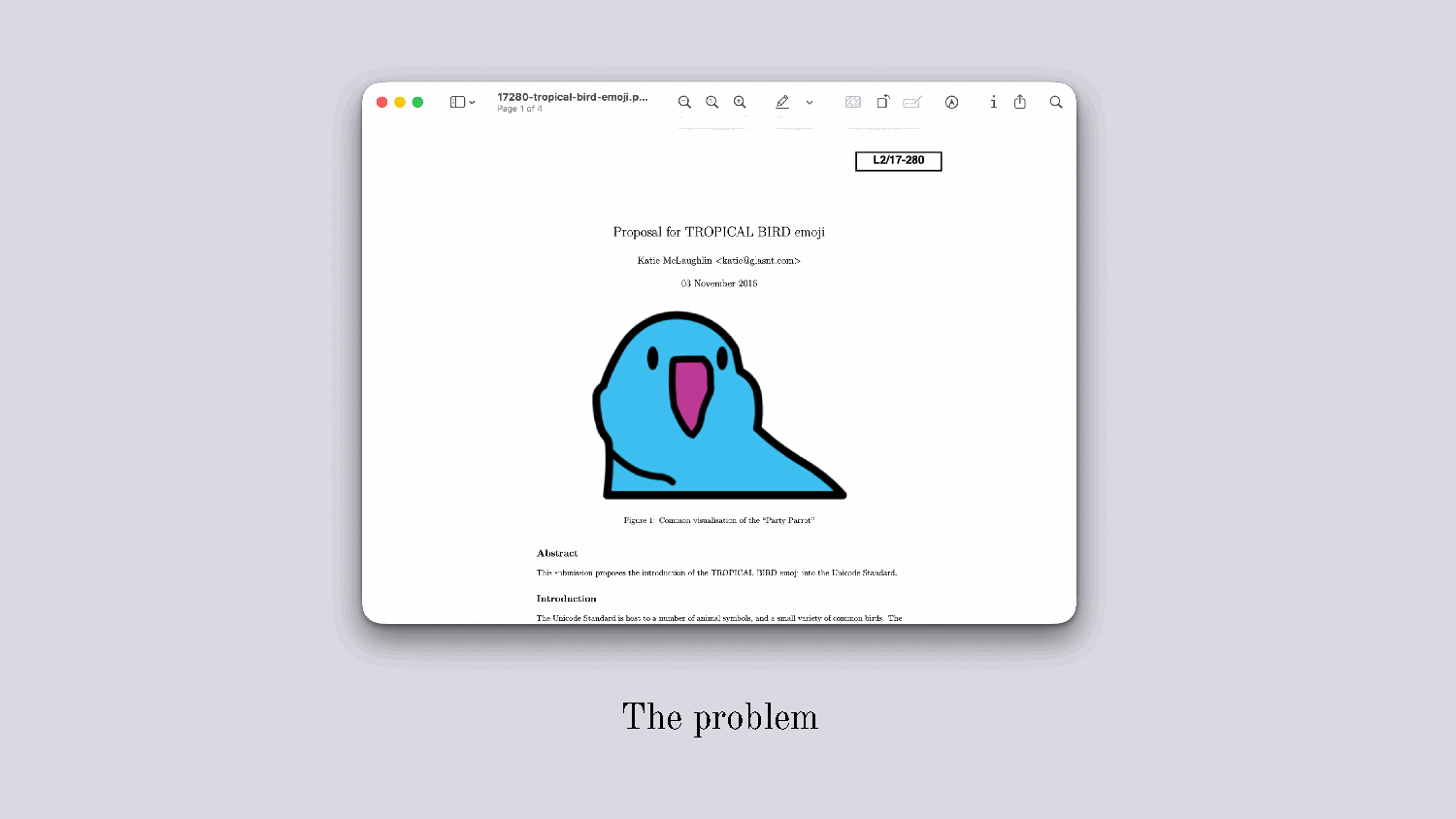 | I am the author of the proposal for the parrot emoji. Well, the proposal for "tropical bird". ... even though kakapo are decidedly not tropical. |
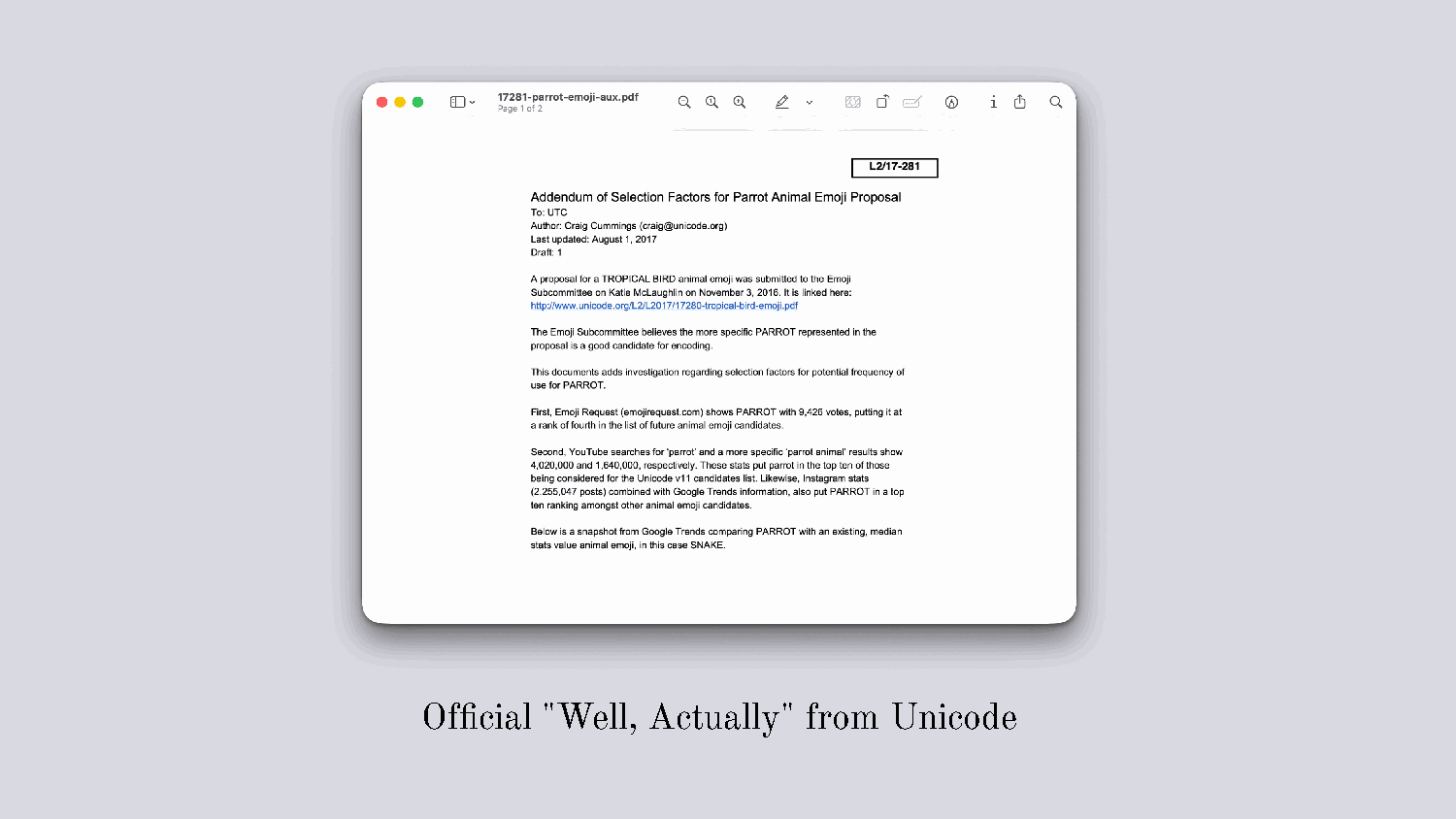 | A further submission to the consortium corrected me on this. However |
 | Even with the screen duplication in the room right now, the arrow is correct. Pyconau is partly to blame for this too. |
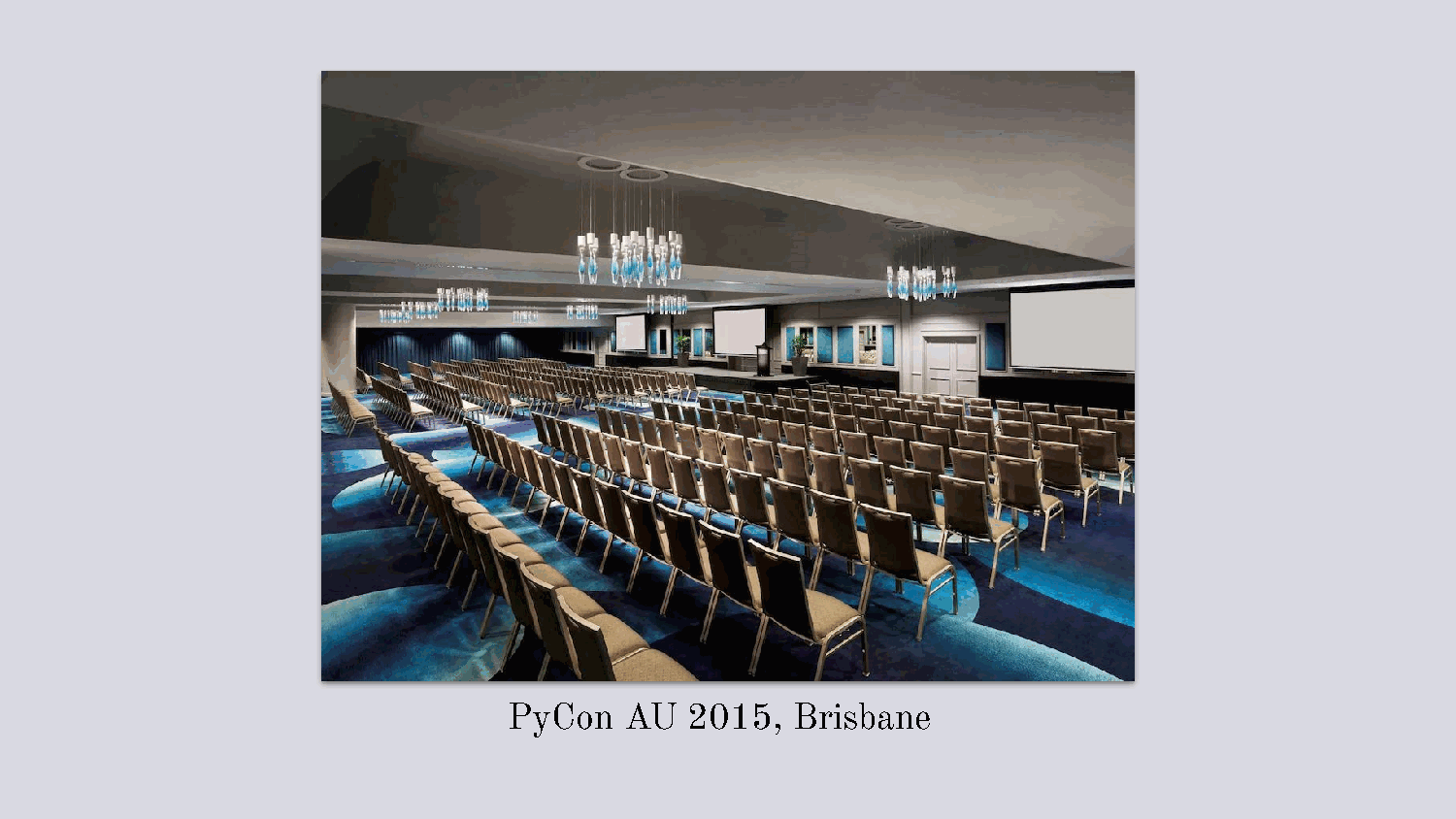 | It was a hallway conversation at the last time Pycon au was in Brisbane, and my first pycon, that led to me giving a talk on emoji. It was a hallway conversation after the first time I gave that talk that the idea to submit the parrot was first made, So, in a way, pyconau has had not insignificant indirect impact on the AI industry, just by this one example. And the impact. Well. |
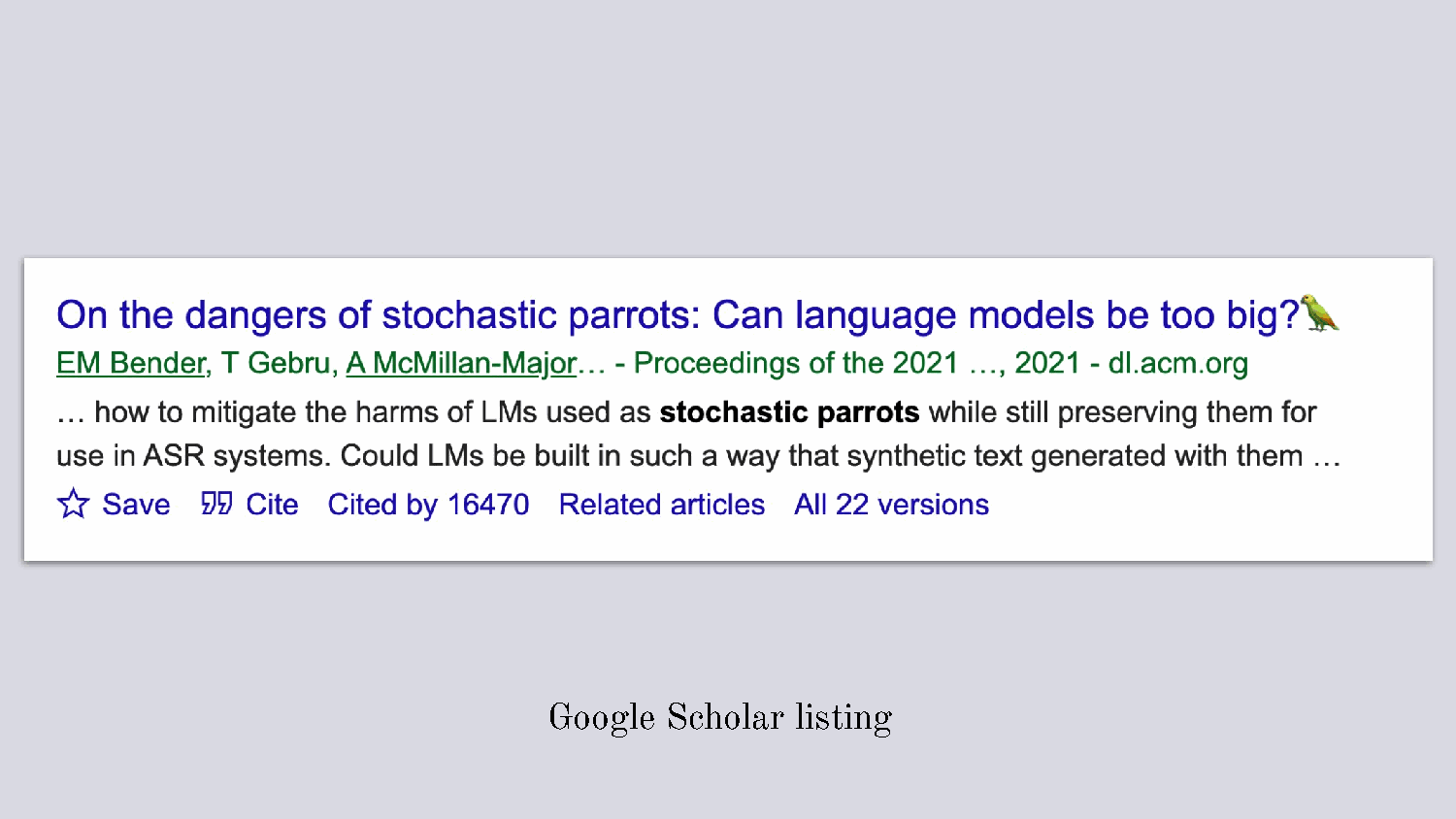 | Bender et al's paper has been cited more than 16 THOUSAND times. This has such a wide range in a lot of esoteric scientific systems. |
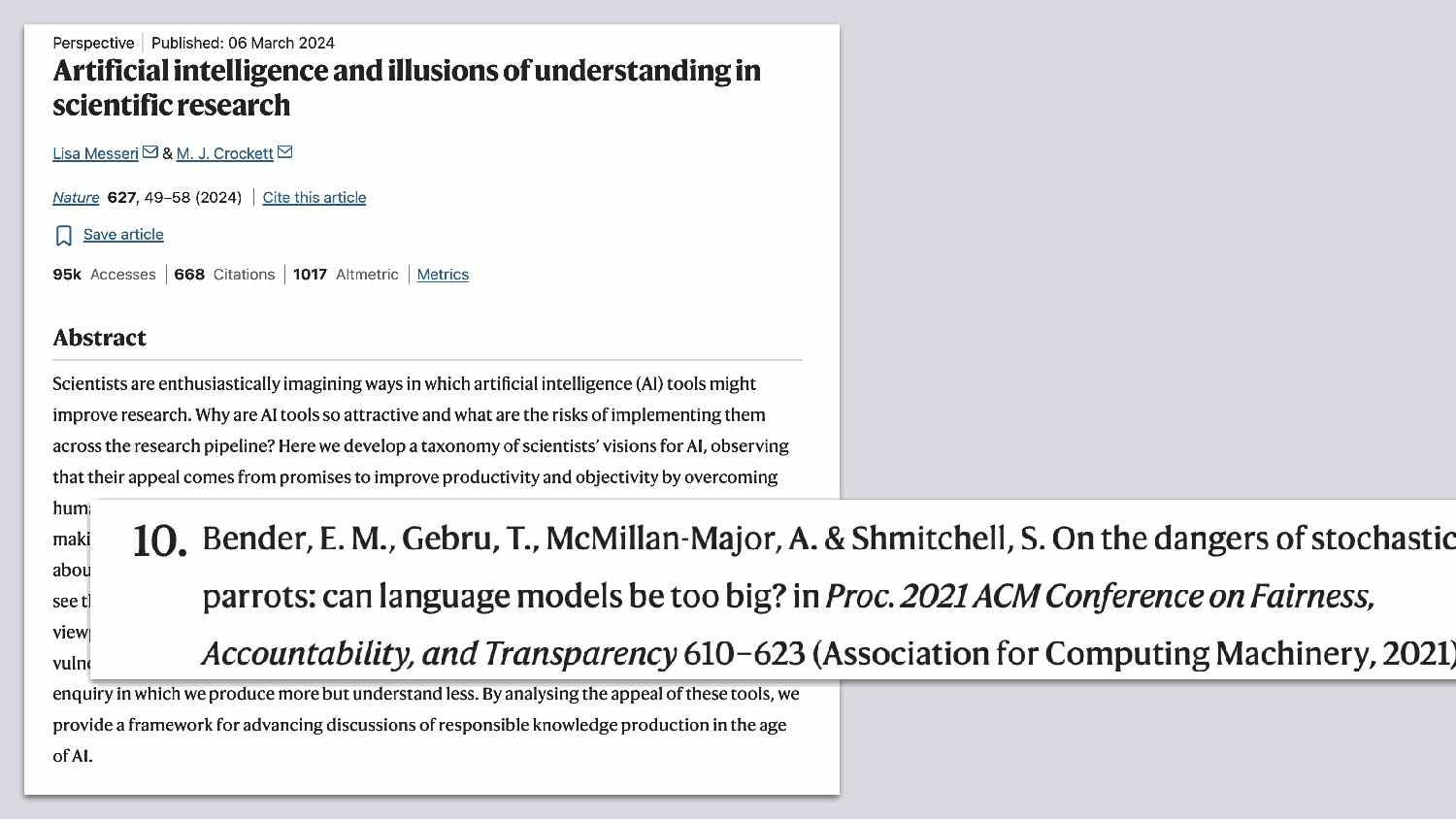 | There are so many examples of where paper has been cited INCORRECTLY, because systems still, in the year of our lord 202-whatever, still don't handle unicode. I also was able to personally speak with Dr Bender about this when she was in Melbourne last year. |
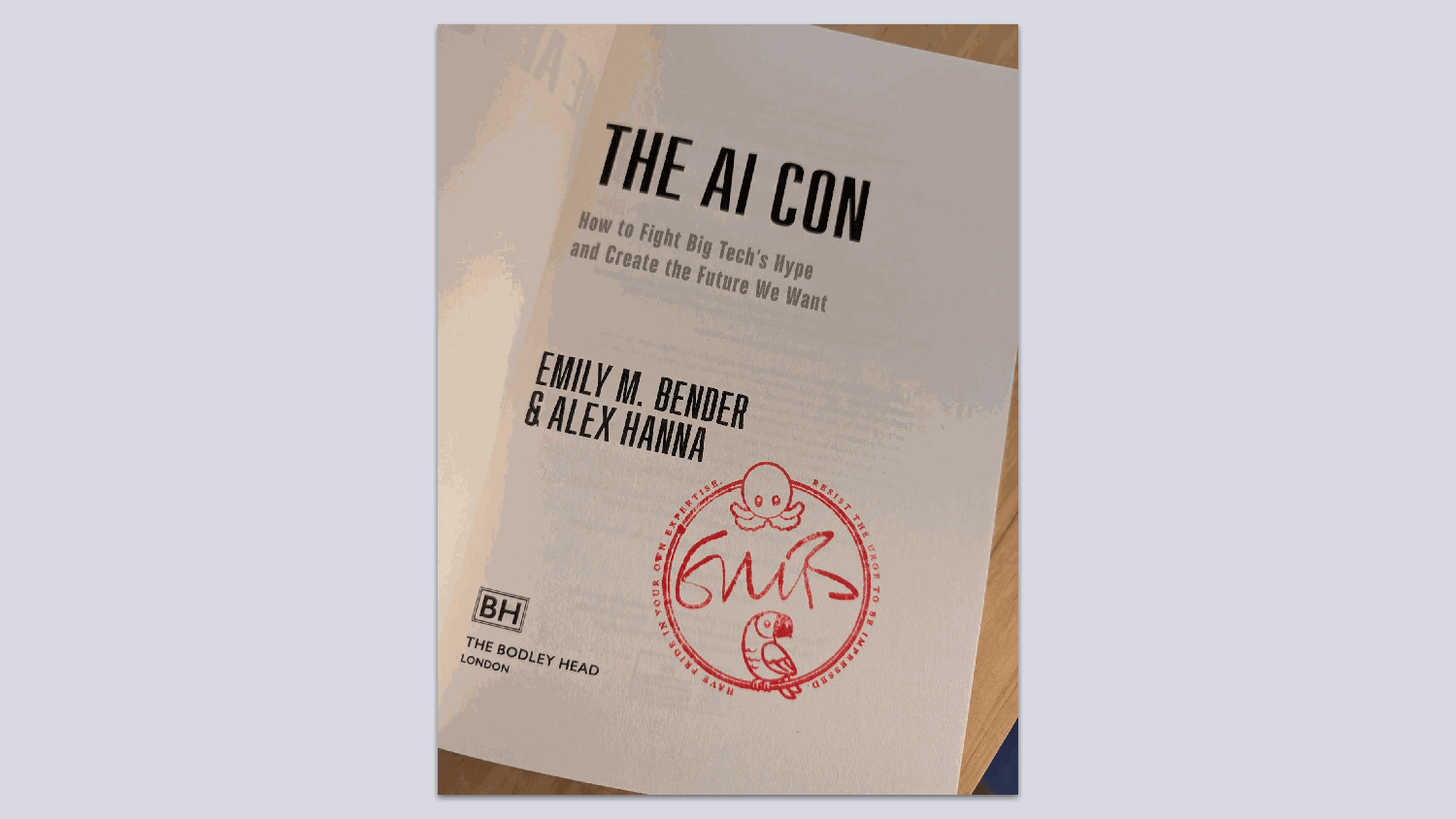 | She spoke about the issues her submission had caused in many ACM paper systems, and when typesetting her book The AI Con, which cited the paper. The printed copy here does include a rendering of the parrot emoji, correctly citing the paper. But that's not the only impact |
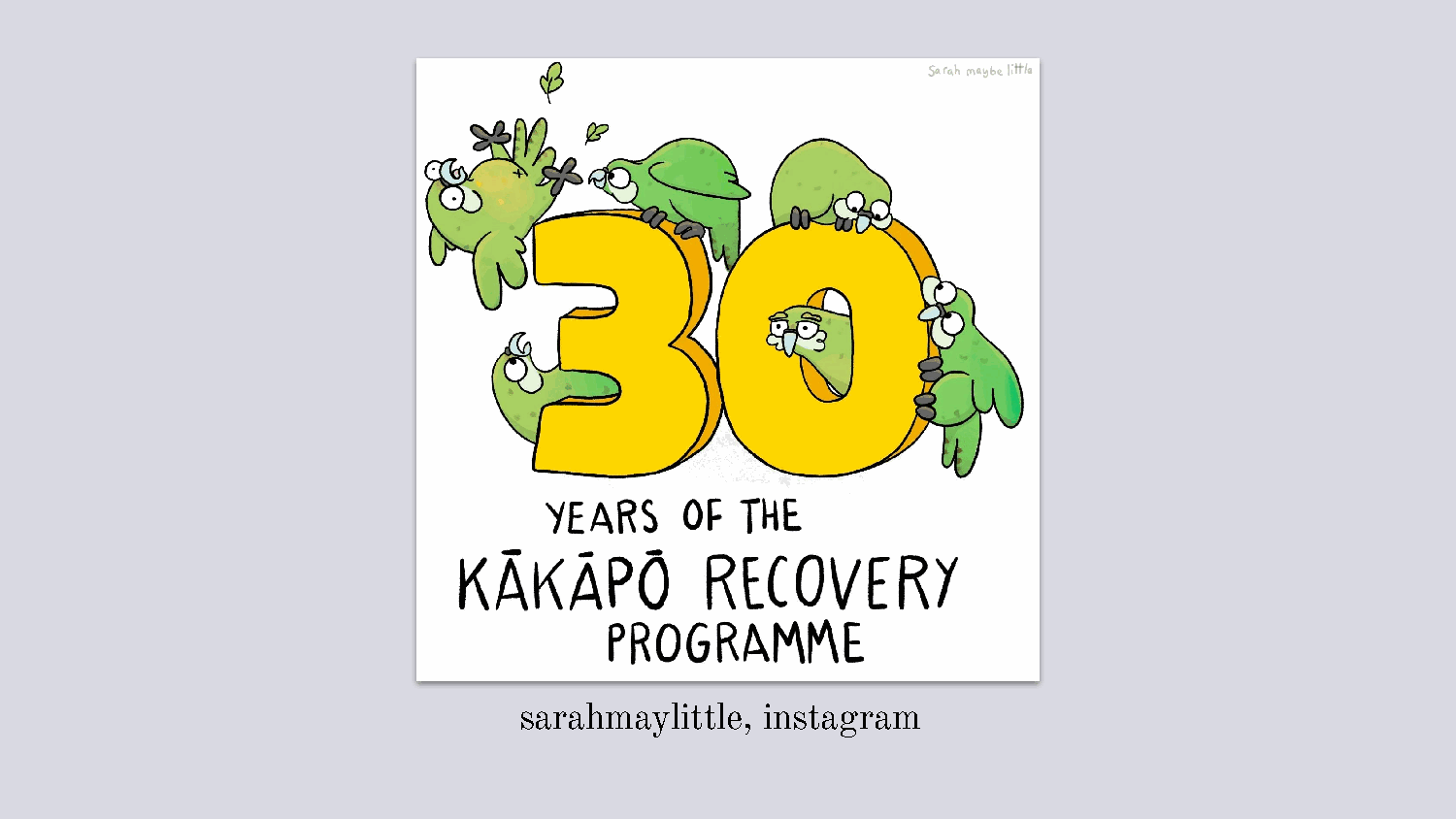 | The kakapo recovery program has been running for 30 years, working to protect the critically endangered kakapo |
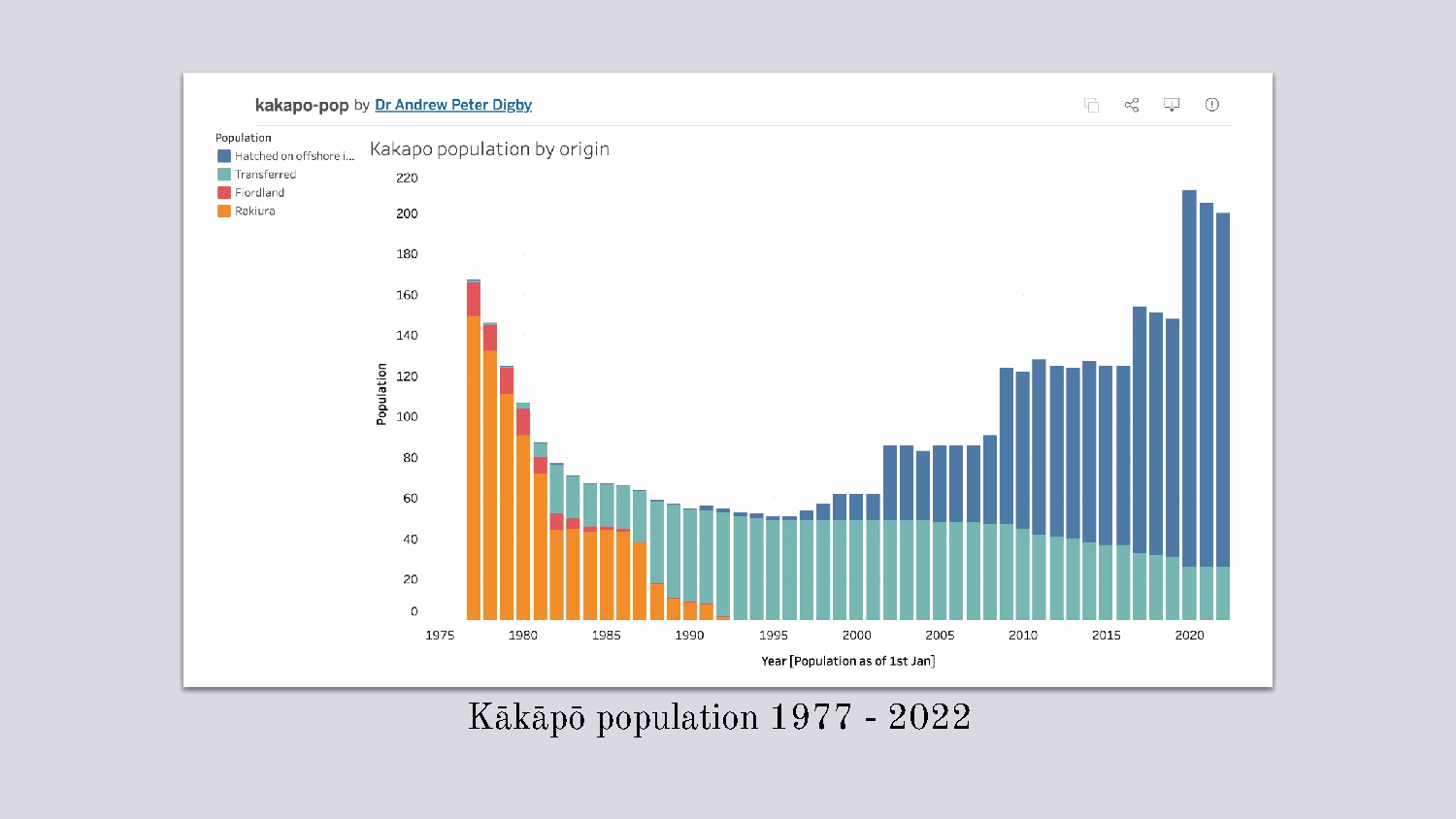 | As of 2022, there were 174 kakapo. Total. But |
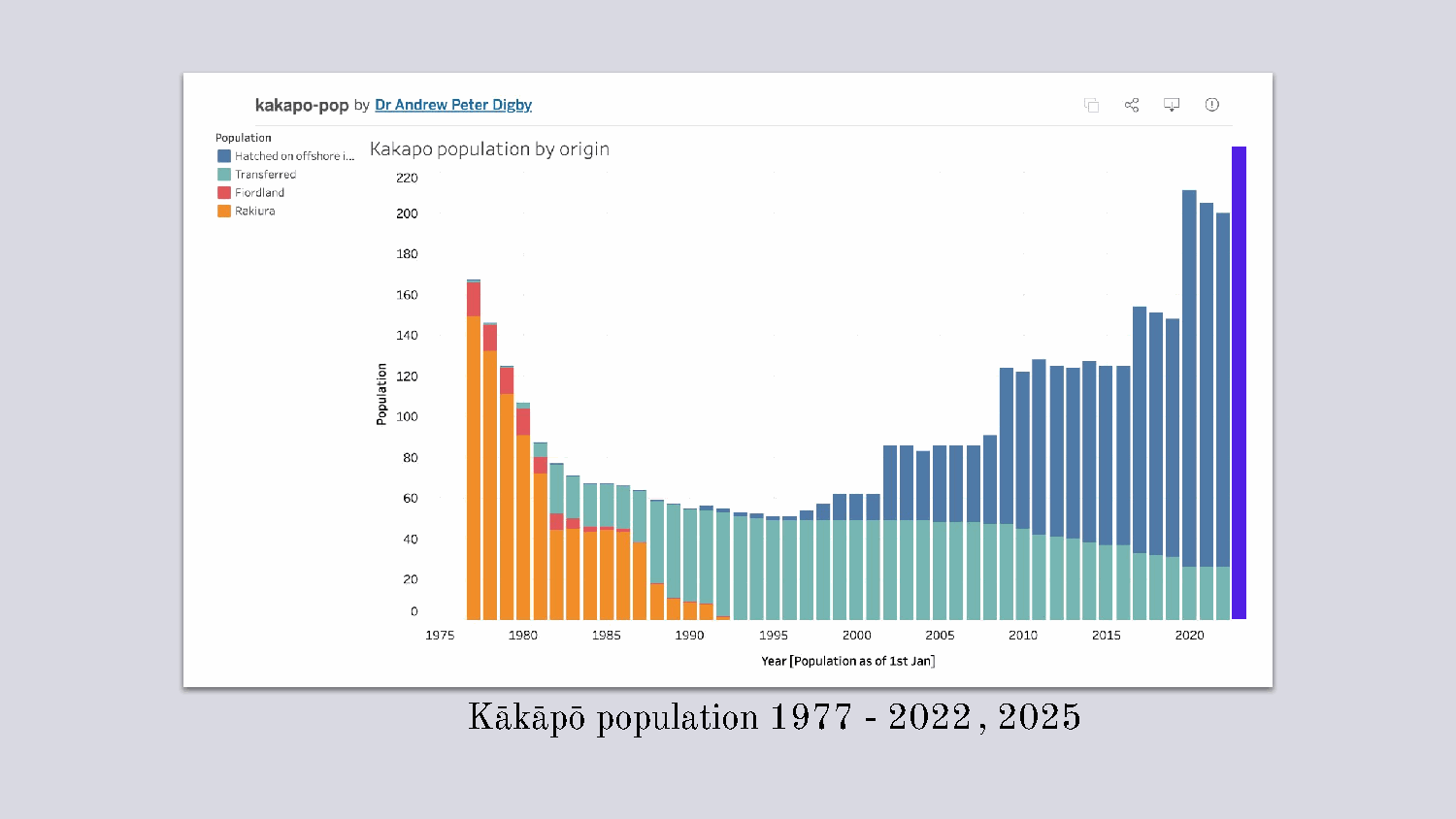 | There were a whopping 95 chicks born in this current breeding season, 2025. [POST PRESENTATION CORRECTION: This data is for the 2025 breeding season. 2 days after this presentation, the 2026 breeding season results were published, with another 90 chicks born https://www.doc.govt.nz/news/media-releases/2026-media-releases/kakapo-population-reaches-new-milestone/] |
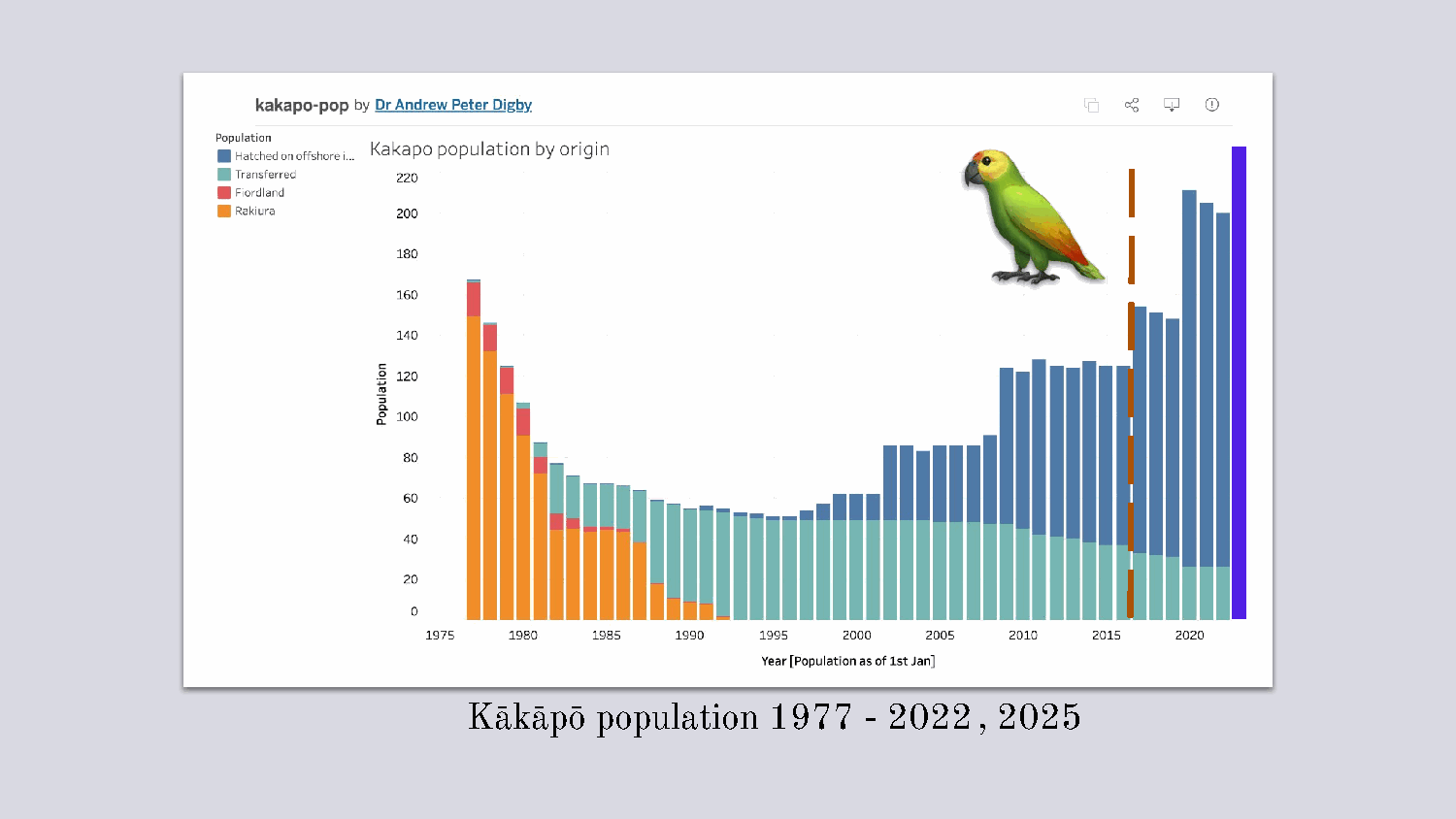 | The number of kakapo have nearly doubled since the emoji was created. You all helped with that. It's been 10 years since the emoji, and 5 years since this paper, and this much has happened. How much more can we do, together, as a community? And how many of those things will have started outside, in this hallway, at this event. |
 |